Introduction
We make infrared heating lamps built for the grind of a semiconductor packaging and testing line. These aren’t just regular heaters. They’re engineered for the backend fab, where uptime and repeatability are the difference between a good year and a great one. When you choose a “foundry-backed” unit, you’re getting a component that’s meant to run hard, day after day, without throwing in the towel early.
Power, Voltage, and Size: Packing a Punch
The heart of our design is simple: a lot of power in a small footprint. A typical unit runs at 400V and 2500W, delivering intense, focused heat without needing a giant enclosure. The 300mm tube length? That’s intentional. It slips into standard mounts in packaging gear and gives you a heating zone that’s even across the target. This setup needs a solid electrical backbone. That 400V input requires a dedicated line, and the 2500W output throws off real heat. Make sure your machine’s cooling and ventilation are up to the job.
What It’s Made Of: Halogen, Quartz, and Smart Connections
Inside, you’ve got a halogen element living in a high-purity quartz tube. Quartz handles the shock of rapid on/off cycling and stays highly efficient at sending out infrared. The halogen cycle keeps the filament stable, so you don’t get the performance fade that plagues standard heaters. The R7s connector is standard for a reason. It’s secure, low-resistance, and easy to wire and swap during maintenance. Less downtime on the line. And inside, the geometry is tuned to reflect heat onto the target, not waste energy warming the air around it.
On the Packaging Line: Heat Where You Need It
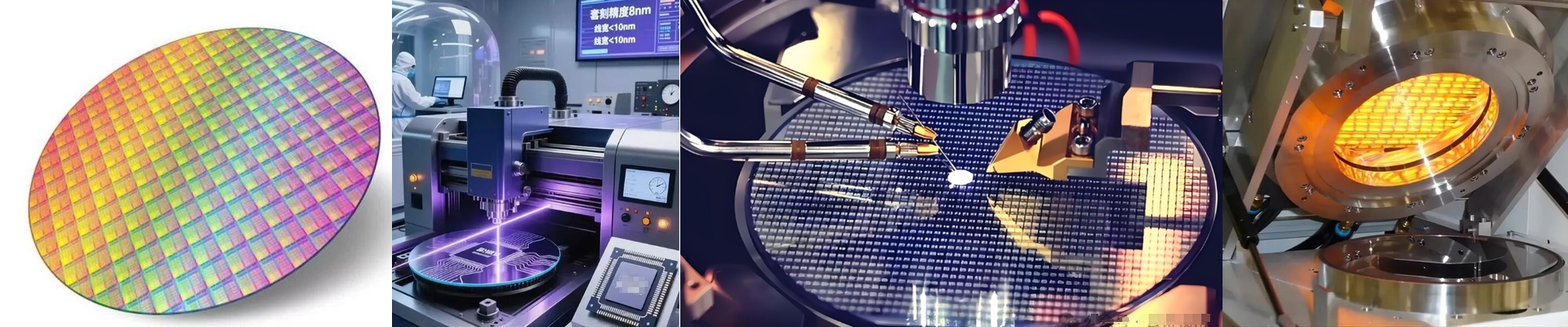
In semiconductor packaging, you need fast, localized heat for leadframe bonding, mold curing, and sealing. Our foundry-grade infrared lamps deliver that heat the moment you need it. The payoff? Faster cycle times and thermal profiles that stay consistent, unit after unit. That means more throughput per shift, and fewer stoppages tied to the heater. The design is cost-smart, not cheap—built to cut waste, not corners. You’re getting a drop-in replacement that can take a beating and keep producing. For a packaging house, that kind of reliability is exactly what moves the needle on the bottom line.