
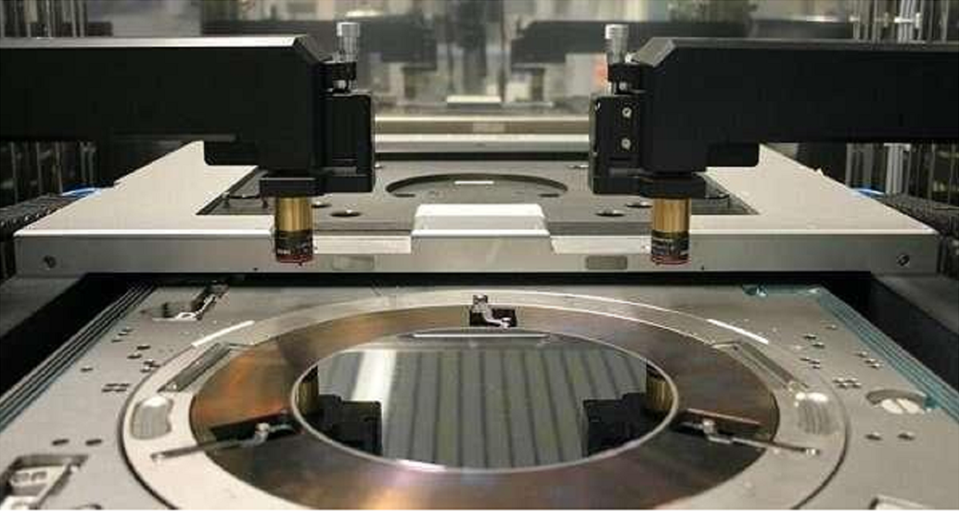
On the fab floor, you can’t treat ashing as a black box. Leftover photoresist after stripping will eat your yield, and if the thermal profile isn’t stable, you can cook an entire lot. Infrared ashing with engineered heating gives you a repeatable thermal budget, every time. What matters, technically We hit the photoresist directly with short-wave infrared emitters—fast, coupled heat that goes into the resist, not the carrier. That keeps the ashing front under control and holds wafer-level uniformity at ±0.1°C. The tool is built for Cleanroom Class 1–100: a sealed, low-outgassing assembly and a thermal path that stays particle-free. Zero particle generation isn’t a tagline. It’s enforced by material choices, clean assembly, and a design that avoids turbulent airflow. The system also keeps your photoresist bake temperature tight across soft bake and hard bake profiles, with repeatability that holds from lot to lot. Why it works in practice In lithography and packaging lines, ashing has to keep up with the cluster tools without drifting. Infrared heat ramps fast, then holds steady, so your strip rate stays consistent and post-ash residue stays below spec. You cut energy because heat is delivered on-demand—no warm-up idle penalty. Unplanned downtime drops, too. The emitters have solid life, and the modular architecture lets you swap modules during scheduled maintenance, not during a critical run. What you need to know Infrared ashing needs precise optical alignment and a clean, reflective cavity. Expect a tighter mechanical envelope than convection systems, so confirm tool footprint and service access before install. You also have to match the emitter spectrum to the resist stack and substrate stack; otherwise you risk overheating sensitive films. Once it’s aligned, the process window is wide enough to run 24/7 with stable results.