
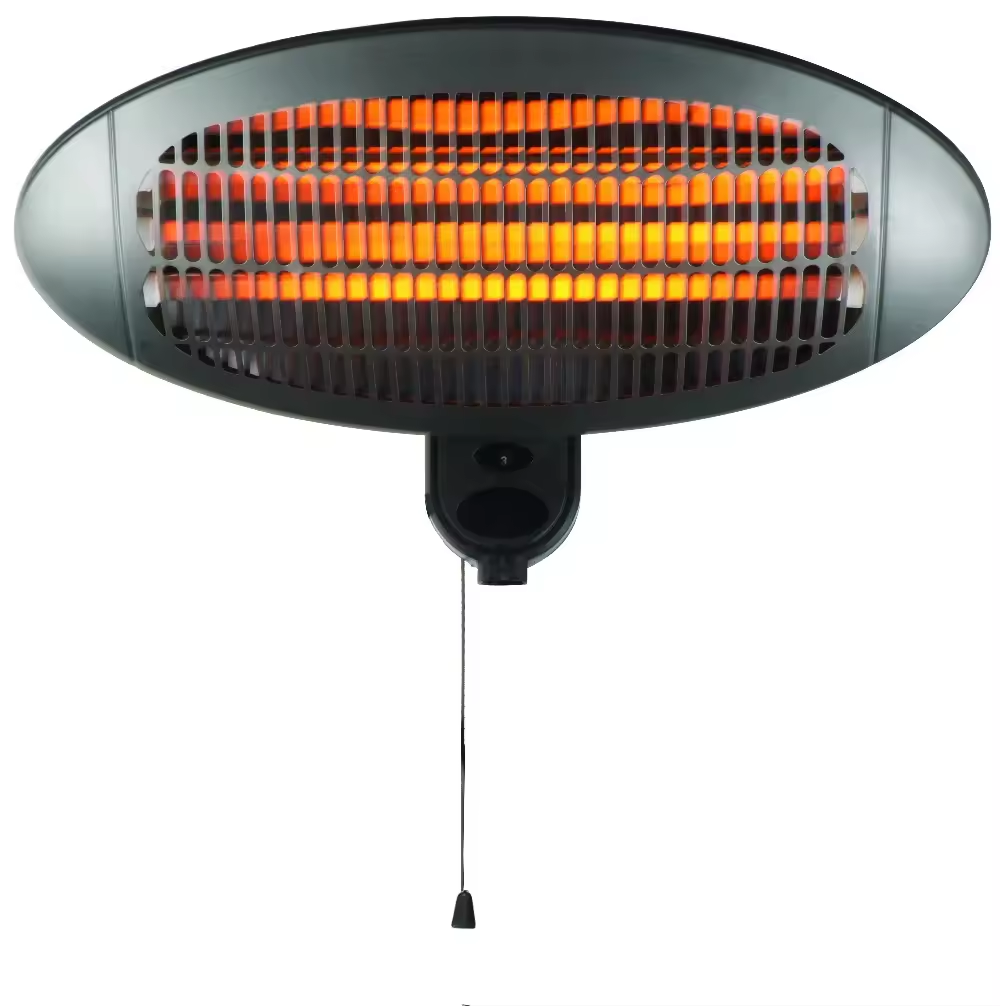
Getting Infrared Heat Right in the Bathroom
Designing infrared heaters for bathrooms is a bit of a balancing act. You want that instant, cozy warmth the second you step out of the shower, but you can’t just blast a room with harsh glare. Especially if there are kids or babies around, the last thing you want is a blinding light hitting their eyes.
Keeping it easy on the eyes
Standard infrared lamps are bright. Like, “don’t-look-directly-at-it” bright. To fix that, we don’t just dim the light—that wouldn’t really solve the problem. Instead, we use quartz tubes with special coatings or a different halogen mix. This shifts the light spectrum, swapping that blinding white flash for a soft, warm glow. You still get the heat soaking into your skin, but your retinas get a break.
The battle against steam and heat
When you see “IP66,” it basically means the thing is built like a tank against dust and water jets. We use tempered glass and heavy-duty silicone gaskets to keep the moisture out. But here’s the tricky part: when you seal a heater that tightly, the heat has nowhere to go. If you cram too much wattage into a tiny box, you’re asking for trouble. The internal temp can spike fast enough to melt wire insulation or pop a seal. It’s all about finding that sweet spot between how much heat you want and how much surface area we have to bleed that heat off.
The real-world trade-offs
Most of these are just drop-in replacements for standard R7s bases, so swapping them out is easy. One thing to keep in mind, though: that eye-protection coating does take a small bite out of the thermal efficiency. You’re trading a tiny bit of raw power for a much safer environment. You might find you need to leave the lamp on a minute longer to get the room feeling perfect, but it’s a trade-off worth making. Just make sure you’re using a moisture-resistant circuit. Bathrooms are humid, and nobody wants a short circuit while they’re drying off.