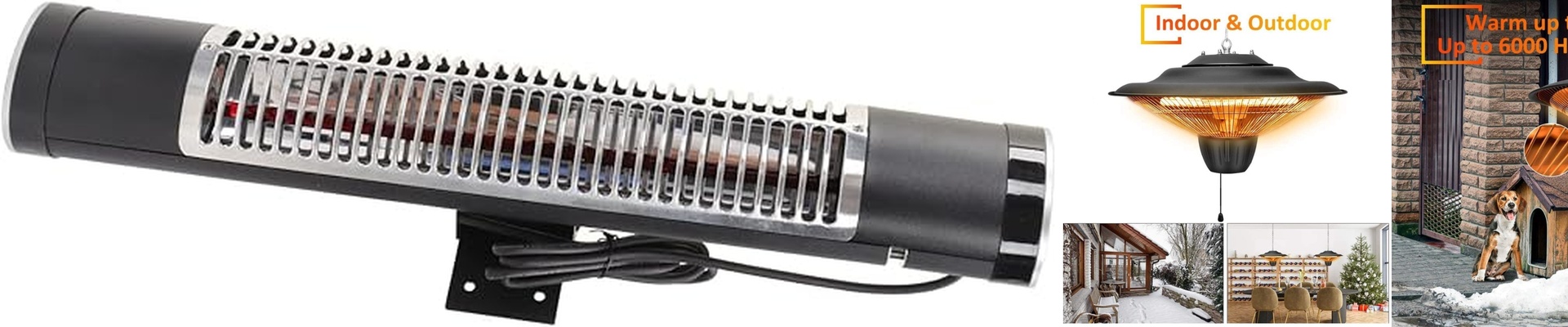
Keeping Your Bathroom Infrared Heaters Safe and Dry
Let’s be honest: putting an infrared heater in a bathroom is basically like inviting a fight with steam and moisture. When you’ve got water vapor floating around and electricity running through the walls, “water-resistant” just doesn’t cut it. You need an IP65 rating. Period. It’s the only way to make sure moisture doesn’t sneak in and hit those live terminals.
Why moisture is such a pain
Water vapor is sneaky. It doesn’t just pour in; it seeps through tiny gaps or failing seals. Once it gets inside, you get something called “tracking,” where the current starts leaking across the insulator. Not great. To stop this, we use sealed gaskets and reinforced potting compounds right where the connections happen. Think of it as a heavy-duty raincoat for your electronics. It creates a solid wall that keeps the humid air far away from the electrical paths.
Getting the insulation right
The real magic happens where the lamp meets the power supply. Standard connectors? Forget about them. They’ll fail. Instead, we use high-temperature silicone seals and IP65 enclosures to wrap everything up tight. We want zero exposed paths for the electricity to wander. But we don’t just build it and hope for the best. We test the insulation resistance (IR) values. We push these units through heat cycles—hot, cold, hot again—to make sure those mega-ohm readings stay high. If a seal shrinks because of the heat, moisture gets a free pass inside. That’s why we use materials that don’t expand or shrink much when things get toasty.
The trade-offs you should know about
Here’s the thing: when you seal a system this tightly to keep water out, you’re also trapping heat inside. It’s a bit of a balancing act. Since the enclosure is airtight, the internal temperature climbs faster than it would in an open-air heater. You can’t just slap these on any wall and walk away. You’ve got to make sure the mounting surface can handle that “heat soak.” If you mount one against a combustible wall without a thermal break, you’re looking at warped plastic or, worse, damage to your wall. And please, for the love of everything, use grounded conduits. Even with the best seals in the world, a GFCI (Ground Fault Circuit Interrupter) is a non-negotiable. It’s the safety net that keeps everyone safe.