Why your bio-sensor line is probably too slow (and how to fix it)
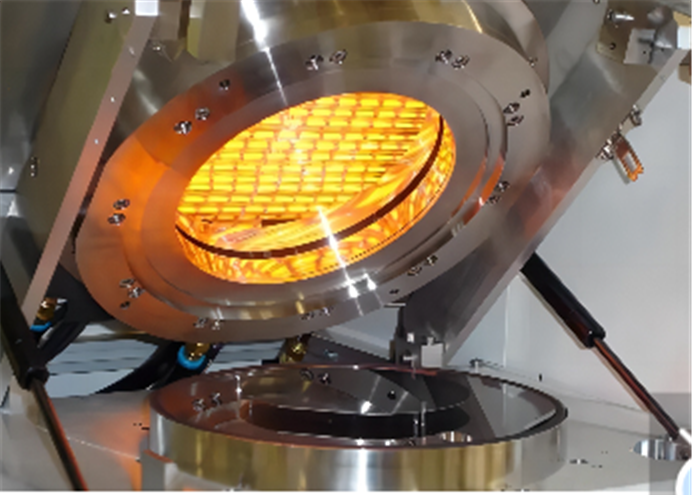
When you’re building bio-sensors, getting the curing and drying just right is everything. Most of the old-school setups we see still rely on hot air. It’s the standard way of doing things, but it’s honestly a bit clunky. Think about how it works: you heat up the air, and then you hope that air heats up your substrate. It’s a middle-man approach. It’s slow, it eats up power, and it just feels inefficient. The waiting game In the world of semiconductor processing, time is the one thing you can’t afford to waste. Hot air systems have this annoying “thermal inertia.” You turn them on, and you wait… and wait… for them to hit the right temperature. Then, when you need them to cool down? Same story. It creates a massive bottleneck in the middle of your workflow. Infrared (IR) heating flips the script. Instead of heating the air, IR uses electromagnetic radiation to hit the target directly. It’s a night-and-day difference. We’ve seen curing times drop from several minutes down to a few seconds. You aren’t sitting around waiting for a chamber to get hot; you’re triggering that molecular reaction in the bio-sensor layer almost instantly. It just feels faster because it is faster. The catch Now, it’s not all magic. There is a trade-off: precision. Because IR is so aggressive, it’s easy to overshoot your temperature. If you just throw a high-wattage shortwave lamp in there without a solid PID controller, you’ll probably end up scorching your substrate. You can’t just “set it and forget it.” You need fast-acting thermocouples or IR pyrometers to keep things stable. Making it work in your shop The good news is that switching to IR is usually pretty painless. You can basically swap out your blowers and heating elements for quartz IR tubes. Plus, your machines get smaller. Since you don’t need those bulky air circulation systems, you save a ton of floor space. For anyone trying to scale up to high-volume production, this is usually the way to go. You get rid of the lag, and you can fine-tune the heat just by tweaking the power or moving the lamp a bit closer.