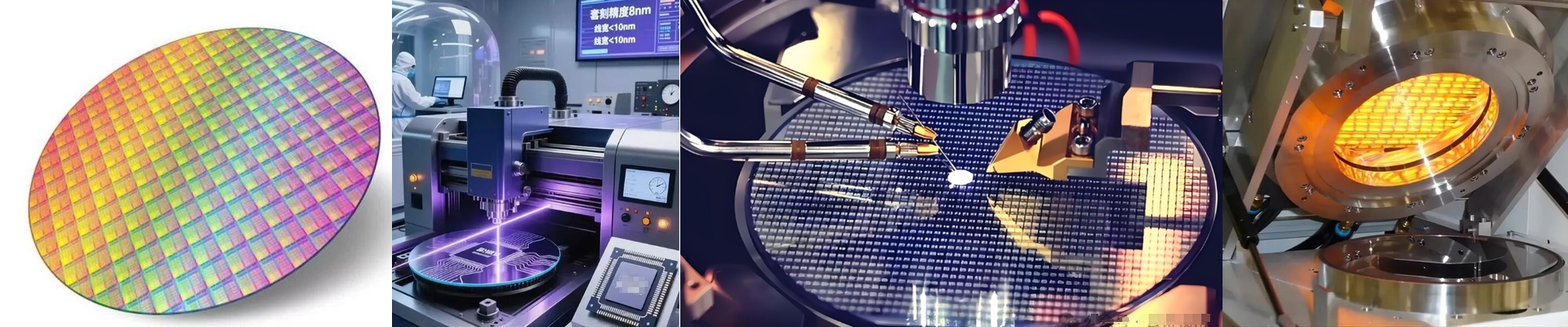
Keeping Your Wafer Heating Systems from Blowing Up
When you’re heating silicon wafers, there is absolutely no room for a “whoops” moment. One tiny arc or a bit of leakage current, and suddenly you’ve trashed a whole batch of wafers and fried your control boards. It’s a nightmare. That’s why we look at every single lamp tube as a potential disaster waiting to happen. We don’t take chances. Every single unit gets hit with HiPot and insulation resistance tests before it even thinks about leaving our shop.
The Scary Side of Physics
Getting the thermal density just right means pushing that quartz envelope to its limit. We spend a lot of time obsessing over the gap between the tungsten filament and the tube wall. Why? Because if that filament shifts even a fraction of a millimeter, the electrical field bunches up. That’s when you get a dielectric breakdown. Our tests are designed to be brutal. We pump in a voltage way higher than what you’ll actually use in production. If the quartz or the end-cap seals can’t handle the beating during our test, they won’t survive in your machine.
No “Random Sampling” Here
Some shops just test a few pieces from a batch and hope for the best. We don’t do that. Every tube goes through the ringer. We track the leakage current at specific voltages to make sure the insulation resistance stays right where it needs to be. It stops “creepage”—that annoying thing where electricity crawls across the surface of the insulator. If you’re running a high-humidity cleanroom, creepage is usually what leads to those random, frustrating short circuits.
The Trade-offs You Should Know About
Here’s the thing: you can’t have everything. If we go for massive insulation ratings, we might need thicker quartz or wider safety gaps. That can shift your IR emission profile and change the heat flux. You’ll probably need to tweak your focal distance and PID controllers to get things dialed in. And a word of advice: don’t crank the wattage too high if your cooling setup for the lamp ends is weak. If those seals get too hot, you’re risking the vacuum or the gas purity in your chamber. And nobody wants that.